
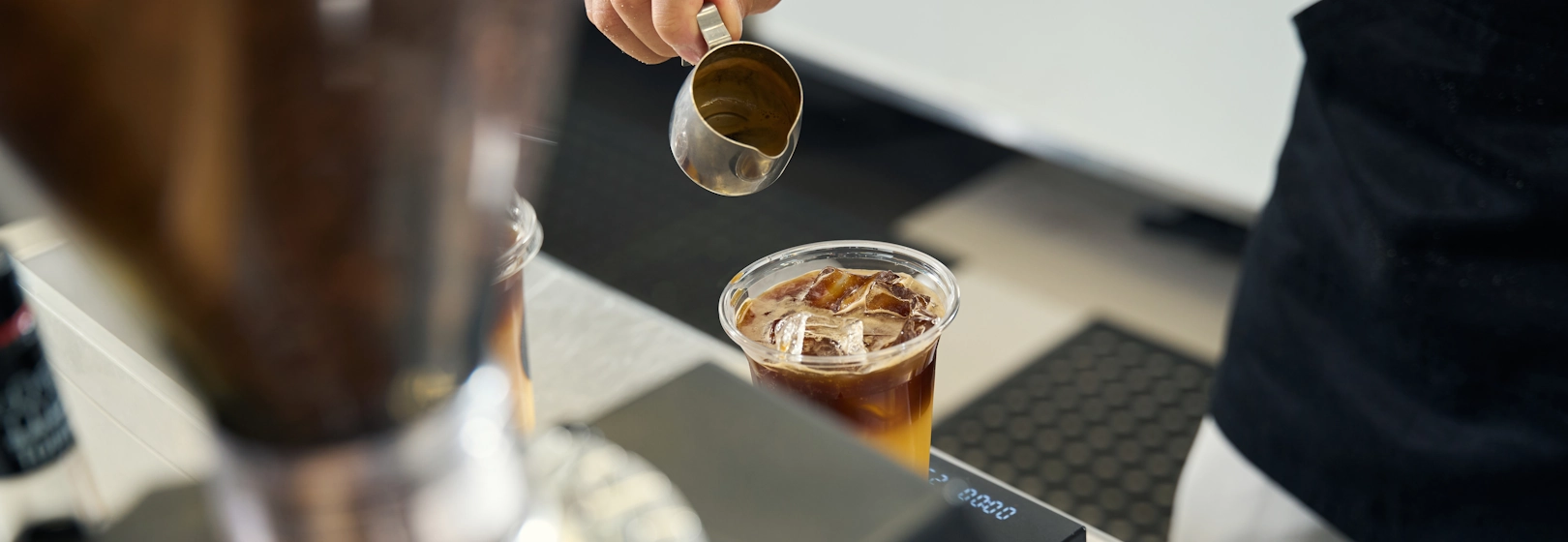
Iced drinks have changed workflow: How baristas can adapt
- Iced, customised drinks are taking over coffee shop menus, often outselling “traditional” hot coffee beverages.
- Major UK chain Caffè Nero’s cold drink sales rose 56% year-on-year in July 2025. Many specialty coffee shops are experiencing similar trends.
- Inevitably, this changes barista workflow; staff now need to factor in different ingredients, preparation methods, equipment, and even movements.
- Automation is emerging as one of the most effective and efficient ways to adapt to changing menus.
“Would you like that hot or iced?”: a now standard question in many cafés around the world.
There’s a cold revolution in the coffee industry – and it’s more than just a seasonal trend. Iced and cold coffee beverages are rapidly becoming a key part of modern café culture.
They now account for more than 75% of Starbucks’ US sales – up from just 37% in 2013. And this isn’t limited to chains; specialty coffee shops are seeing a similar shift. Many roasters, like Blue Bottle and Stumptown, serve cold drinks every day, all year round.
This transformation has rewritten the rules of coffee service, forcing baristas to reconsider their workflow and sparking a new wave of innovation behind the bar.
Keelan Hartnett of Flo-Smart and Josh Tarlo of Origin Coffee explain how.
You may also like our article on whether customised drinks push us away from specialty coffee.

From seasonal to signature: The rise of cold coffee
Only ten years ago, consumers looking for cold drinks had the choice of iced americanos and lattes or cold brew. But this limited selection is no longer sufficient, as the demand for cold coffee has since exploded.
For instance, the National Coffee Association’s fall 2023 National Coffee Data Trends report found that consumption of cold brew in the US alone has increased by a staggering 300% over the past seven years. Traditionally ordered during warmer months, consumers are now drinking iced and cold drinks all year-round, and they want more choice.
Today, cold coffee encompasses nitro coffee, cold foam-topped drinks, flavoured matcha, and viral lattes with layered textures and visual elements. And there’s one factor driving this explosion in variety: Gen Z’s love for customisation.
Recent research by UK roaster Lincoln & York reveals that nearly 40% of consumers aged 18 to 34 are drinking more coffee outside their homes than ever before, and they are demanding more from their beverages.
Up to 75% of these young coffee drinkers are opting to customise their drinks with add-ons like plant milks, flavoured syrups, cold foam, and functional ingredients. These include adaptogenic mushroom powder, MCT oil, and L-theanine, which are said to boost productivity and mental clarity.
As “little treat” culture – the growing trend of indulging in small, affordable luxuries, often as a way to cope with stress during difficult economic times – proliferates, customised coffee is booming. In many cases, cold coffee is the ideal canvas for this creativity and self-expression, catering to the growing demand for indulgence and aesthetic appeal.
“People want drinks that actually taste and look different,” says Josh, the director of growth at Origin Coffee, a specialty coffee roaster in the UK.
In turn, specialty coffee shops have an opportunity to drive revenue.
“One of our most recent hits – the Cold Brew Cherry Tonka Cold Foam – helped increase cold drink sales by 70% year-over-year,” Josh adds.

How cold coffee has transformed barista workflow
Although profitable, offering a variety of iced coffee drinks comes at a cost: more ingredients, more steps, and more pressure on baristas.
Preparing cold beverages is often more time-consuming than hot coffee, pulling baristas away from the espresso machine toward a patchwork of fridges, syrup pumps, ice bins, and blenders.
“Iced or customised drinks typically require a lot of manual steps, which can lead to slower service,” says Keelan, the managing director of Flo-Smart, a company specialising in smart beverage dispensing.
The traditional bar setup – built around the espresso machine – is often ill-equipped for the ever-widening range of today’s cold drinks. As cafés have added more iced, customised offerings to their menus, the necessary equipment was often added on an ad hoc basis, rather than being fully integrated.
The result? What Keelan refers to as a “disjointed workflow”.
A “cracked” latte, for example, a viral iced latte served in a cup coated with hardened chocolate, which cracks when the cup is squeezed, might require seven or more steps across distant bar stations.
“You’re asking a barista to move five different times for one drink,” Keelan says – an often impossible task for even the most seasoned staff, especially during a busy rush.
“Start by mapping out your current cold drink workflow,” he adds. “Then redesign the bar to reduce unnecessary movement; create zones where everything, from oat milk to syrup, is easily within reach.”
Josh explains that Origin has applied this approach across its wholesale partners, helping them streamline service.
“We provide resources like concentrates and ready-to-drink formats so they can serve cold coffee properly,” he tells me. “You can make an iced latte in a third of the time.”
Customised cold drinks tend to have higher profit margins – and customers are willing to pay more for them. But they also increase the risk of bottlenecks, waste, and inconsistent quality.
To manage the complexity of modern cold drinks, more cafés are adopting automation to assist baristas in readjusting their workflow. These systems include automated milk foamers, milk and beverage dispensers, water fonts, and cold brew makers.
“You can go from 300 to 750 drinks a day and still maintain your margin,” Keelan says. “Automating complex cold drink menus allows baristas to delegate repetitive tasks. These include dosing milk, cold brew, or espresso concentrate with precision and speed.
“You could serve up to ten iced coffees in a minute without moving.”
From optional to essential: What’s next for iced coffee?
Josh sees the influence of cold, customised coffee growing.
“Cold coffee opens up new flavour profiles and creative space,” he says.
The iced drink trend isn’t just limited to Western countries. In East Asia, cold drinks have long been a creative playground. From cheese tea to sparkling cold brews, cafés in Korea, Japan, and China are inspiring drink innovation globally.
As customer preferences shift further toward cold beverages, cafés can’t afford to treat them as an afterthought. The tools to manage them – from bar layout to automation – are becoming increasingly essential.
“Cold drinks have better margins, they’re faster, and customers will pay more for something different,” Josh concludes. “Adapting to them is about making baristas faster and more consistent.”

Cold, customised coffee beverages are here to stay – not just as a seasonal spike, but as core drivers of café profitability. To thrive, coffee shops must adapt their service routines, invest in supportive equipment, and empower baristas to do their best work.
By streamlining repetitive tasks and enabling creative freedom, cafés can serve drinks that are as exciting as they are efficient. The future of coffee isn’t just hot; it’s cold, customisable, and built around smart design.
Enjoyed this? Then read our article on whether coffee shops are overthinking the basics.
Photo credits: Flo-Smart
Perfect Daily Grind
Want to read more articles like this? Sign up for our newsletter!

Bianca Maria Maschio is a coffee consultant, trainer, and entrepreneur with a strong focus on sustainability and quality. She holds a Master’s degree in Coffee Economics and Science from the University of Udine and Fondazione E. Illy. She has worked across various areas of the coffee sector, from sensory analysis and quality control to education and ethical sourcing. Bianca is a Q Grader and Assistant Instructor with the Coffee Quality Institute. She currently runs her own business, offering training and consulting services to baristas, roasters, and coffee shops.


