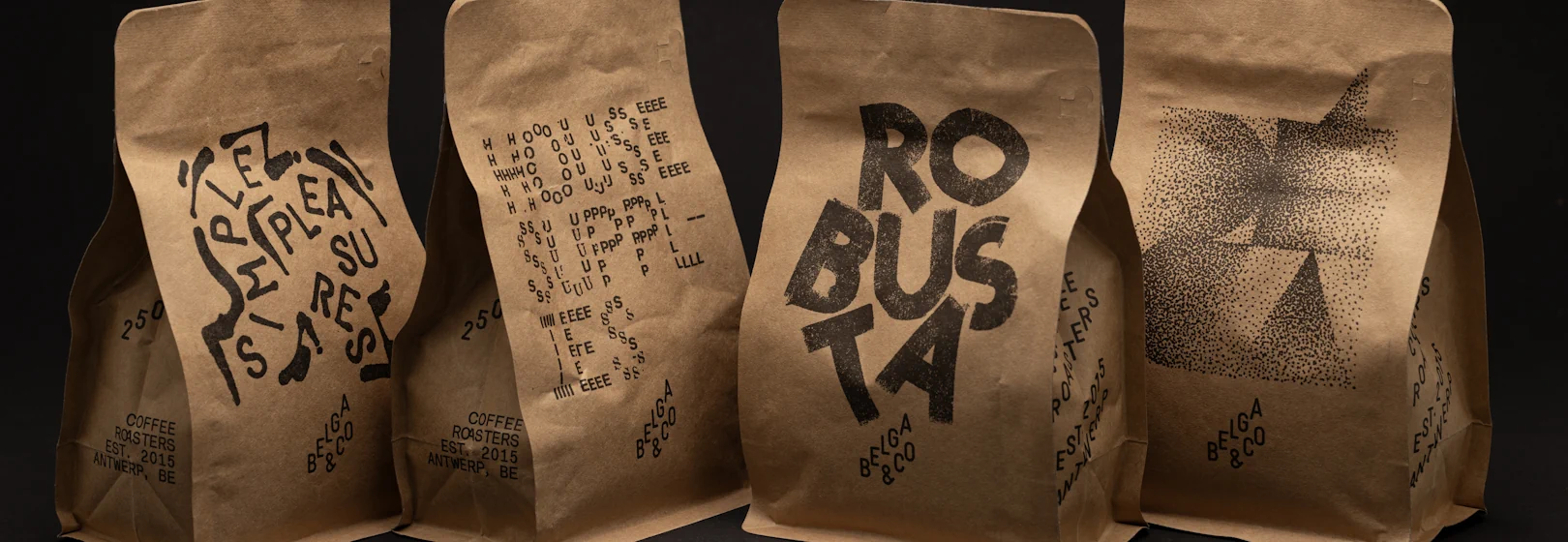
More roasters are rebranding than ever before – but it’s easier said than done
- Most businesses refresh their branding once every seven to ten years; however, given how young specialty coffee is, roasters tend to rebrand at a higher rate.
- Over the last ten years, many coffee roasters, large and small, have refreshed their packaging and brand messaging to stay relevant and resonate with customers.
- A highly volatile market is putting more pressure on roasters to rebrand, but it’s a process that requires careful consideration.
- When employees understand the motive and rationale behind the decision, it’s likely to resonate more with customers.
Brand differentiation has always been a key part of specialty coffee. Roasters emphasise their commitment to quality, sustainability, craft, and consistency to retain customers and draw in new ones.
But rising inflation rates and record green coffee prices are forcing businesses to rethink their strategies. Simultaneously, market competition has intensified, which pushes roasters and coffee shops to find new ways to stand out.
Rebranding has emerged as an effective way to differentiate, keeping brand image modern, fresh, and relevant. Over the last decade, small and large players alike, including Starbucks, Stumptown, and Blue Bottle, have updated their logos, packaging, and brand messaging to reaffirm values and keep up with new trends.
There’s then a growing pressure for specialty coffee roasters to follow in the footsteps of prominent brands and refresh their own branding. Although this venture can certainly be successful, it requires a strategic approach – and value proposition needs to be clear.
I spoke to several people at Belga & Co., a specialty coffee roaster in Antwerp, to learn about the company’s rebranding experience.
You may also like our article on why specialty coffee brands care so much about consumer trust.

Market saturation: The need to stand out
Specialty coffee consumption has proliferated in almost all corners of the world over the last few decades. The National Coffee Association’s latest NCDT report found that the number of US citizens drinking specialty coffee in the past day has increased dramatically between 2020 and 2025. For every 100 cups of coffee consumed, 59 are specialty and 41 are traditional, representing an increase of 18% over the five-year period.
Meanwhile, in Europe, specialty coffee consumption is also steadily increasing, including in less established markets. Between 2013 and 2021, the number of specialty coffee shops and roasteries in Romania increased from only three to more than 120, while Hungary is now home to over 150 specialty coffee businesses.
Naturally, as interest in and consumption of specialty coffee has grown, consumer demand has shifted, and roasters and coffee shops have needed to keep up.
”When I started working in the coffee industry in 2009, the focus was purely on the quality of the product,” says Loïc Installé, the co-founder of Belga & Co., a specialty coffee roaster in Antwerp, Belgium, which also operates cafés in Brussels. “Back then, there was less focus on how and what your brand looked like.
“People were only starting to discover the different flavours and amazing quality that specialty coffee had to offer, and starting to set standards for ethical sourcing,” he adds. “Sixteen years later, the industry has changed a lot.
“With the rise of social media marketing and consumption of specialty coffee, which has almost become a mainstream product, roasters have to jump out from the crowd. We still have the focus of serving a consistently high-quality product, but we now have to combine that with storytelling and a brand image that our clients can identify with.”
What makes rebranding effective?
The coffee industry is currently facing a challenging period, marked by uncertainty and volatility. Sustained high green coffee prices are forcing roasters to pivot their sourcing strategies to more cost-effective yet high-quality lots, while tariffs and rising operating costs are straining profit margins.
In this difficult climate, roasters need to stay relevant to their core audience while also attracting new customers. Rebranding has emerged as a strategic response to a demand for differentiation and relevance in an overcrowded market.
“Through rebranding, we can redefine our visual identity and packaging, which helps us stand out in an increasingly competitive landscape,” Loïc says. “It also helps us stay relevant in a world where design and storytelling are becoming more and more important.”
Brand identity has always been a key factor in the specialty coffee industry, especially as a way to differentiate from commercial-grade competitors. Given the rapid rate of innovation in the market, it’s all too easy for branding and marketing to feel “outdated”, losing their resonance with consumers.
“After ten years, a rebranding is necessary to give new energy to a brand, without fundamentally changing the company’s culture,” says Charly Meerbergen, the co-founder of Belga & Co. The roaster recently rebranded after celebrating its tenth anniversary, which included updates to its packaging and opening a new café.
“Brand identity is what you need to reflect your company’s DNA and present your products, but it also distinguishes you from competitors,” he adds. “For us specifically, however, it’s more than that – it’s a promise to transform through the constant quality of products, staff training, and customer experience.
“To achieve this goal, we are constantly questioning ourselves and trying to improve our company’s culture through training and education.”

Why rebranding requires a holistic approach
Most businesses refresh their branding once every seven to ten years; however, given the relative youth of specialty coffee, roasters tend to rebrand at a higher rate.
Over the last decade, many prominent small and large roasters have updated their logos, packaging, and brand messaging to remain relevant in a rapidly evolving industry.
With this shift in strategy, there’s then a growing pressure for roasters to follow in the footsteps of their competitors. Rebranding and brand refreshes are investments, but changing visual elements of a business is often less costly than product innovation or continuing to source higher-priced coffees.
“In my opinion, a rebrand goes beyond aesthetics and a new logo; it’s about creating new experiences within the company,” says Roman Melnyk, a roaster at Belga & Co. “Company culture and staff attitudes are central to this transformation. Positive and reliable staff naturally fosters stronger relationships with clients.”
A brand refresh is a significant undertaking for any coffee company and requires effective communication and teamwork. When employees understand the motive and rationale behind the process, it’s likely to resonate more with customers.
“Ten years ago, we started this adventure with the philosophy that we can only do so many things ourselves and that we need motivated staff to help us grow,” Loïc says. “Our staff are the heart of our company, and we recognise and prioritise their involvement throughout the brand refresh process.
“We are also striving to maintain a strong workplace culture that reflects our values, through training programmes and team-building activities. The rebranding is also a way to inspire our staff and give them a sense of pride in working with us,” he adds. “When they support the rebranding, they become brand ambassadors, contributing to a strong connection with our customers.”

Building a foundation for continuous innovation
A highly volatile coffee market is pushing more roasters to rebrand, which can add more pressure on operations and create a sense of trepidation. Roasters may then rush the process, focusing primarily on short-term changes, but cutting corners on quality and value proposition won’t result in success.
Instead, there needs to be an emphasis on the core values of the business.
“Belga & Co. has always been, first and foremost, about providing the best coffee for our customers,” says Krista Stellavato, a business advisor at Belga & Co., who also used to be a regular customer. “This dedication to quality coffee means relentlessly seeking to improve and optimise procurement, roasting and service; however, this is often invisible to the customer.
“A rebrand is an opportunity to celebrate all the effort, at every stage of the production process,” she adds. “It sends a clear signal to customers that your company has evolved in a dynamic marketplace, that it strives to continuously adapt to serve its customers’ changing needs, while remaining true to the company’s DNA of a commitment to quality coffee.”
From here, roasters have the opportunity to be truly creative and innovative, updating and refreshing different elements of their business.
“At the beginning of the process, we contacted a graphic design studio to help us create new packaging,” Charly says. “We then quickly decided it made sense to undertake a total rebranding, as, after ten years, we are at a key moment of growth as a company.
“A complete rebranding helps us reflect that Belga & Co. isn’t just a coffee brand, but that we also focus on people, planet, and product,” he adds. “We can only achieve this as a team, where every individual has their place in the process.”
Consistency is key
To achieve its purpose, a brand refresh must resonate with customers, whether they are new or long-term. This means that a company’s website, social media, and other communication platforms – including its presence at events – must present a clear, consistent message that is easily understood.
“For our current customers, the refresh shouldn’t feel like a complete departure from the start, but rather a natural evolution,” Loïc says. “It should create enthusiasm and reinforce their loyalty to the brand, showing that we continue to grow while staying true to our origins.
“With new customers, it gives us an opportunity to make a strong first impression in an ever-evolving market with growing competition,” he adds. “Throughout the brand refresh, we can tell a story, present a visually appealing new identity, and communicate in a clear way that resonates with new audiences.”

Refreshing brand identity is essential when striving to stay relevant in today’s competitive market, but it’s about more than visual storytelling.
The collaborative energy needed for a successful rebranding process stems directly from all staff, who embody the new, innovative mindset of the company. From here, roasters have the leveraging power for continued growth.
“Our rebrand provides us with the toolkit to stay ahead of consumer expectations and trends,” Loïc concludes. “It helps us remain relevant in today’s coffee landscape, where consumers prefer authentic brands with effective communication and clear company values.”
Enjoyed this? Then read our article on whether specialty coffee brands are becoming more and more similar.
Photo credits: Belga & Co.
Perfect Daily Grind
Please note: Belga & Co. is a sponsor of Perfect Daily Grind.
Want to read more articles like this? Sign up for our newsletter!

Barista, roaster and SCA trainer. Coffee has taken me round the world and I want to share my experience with everyone.